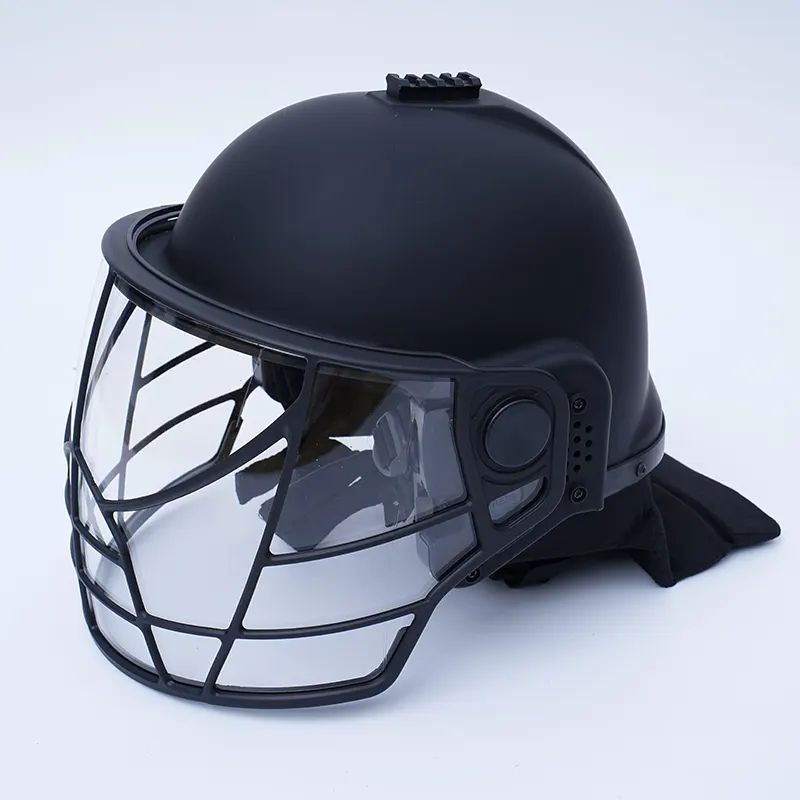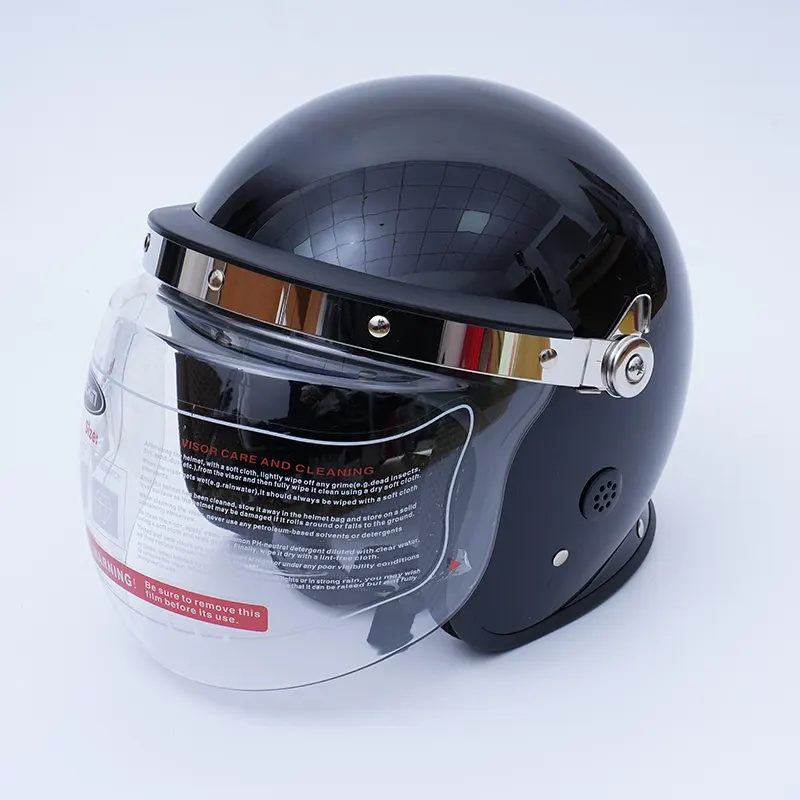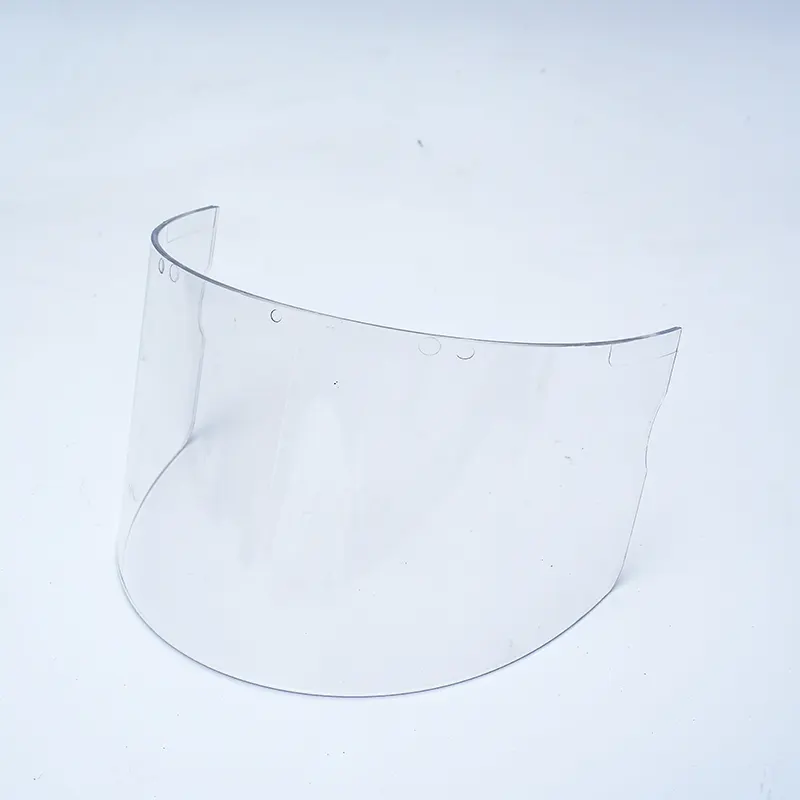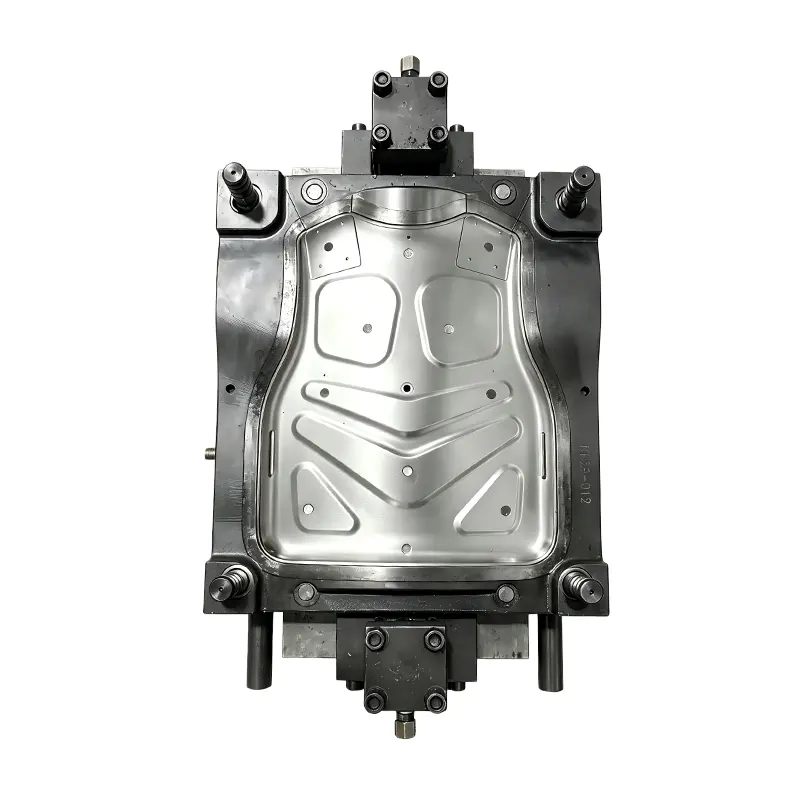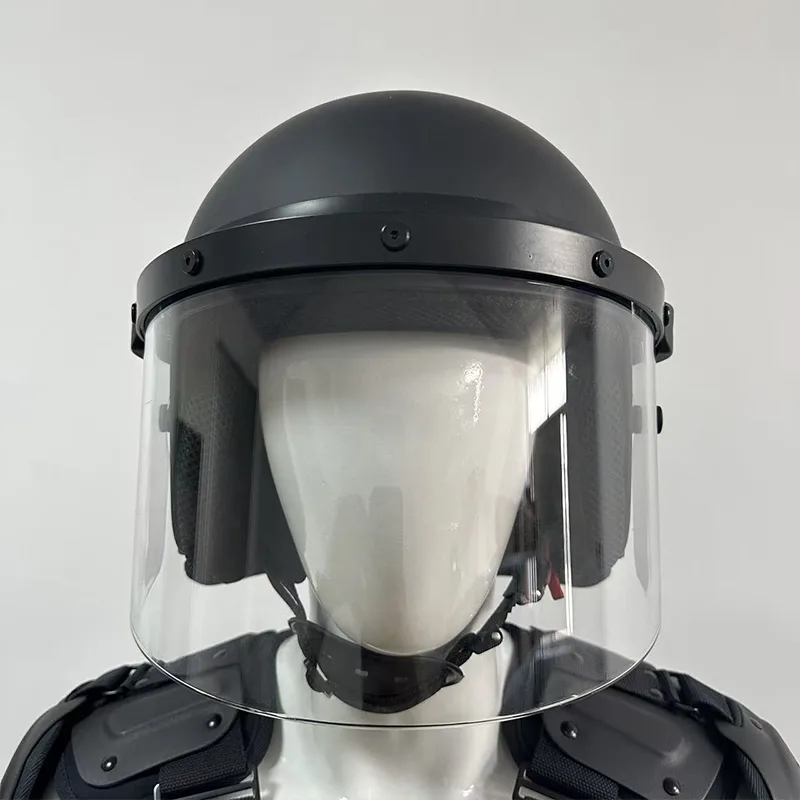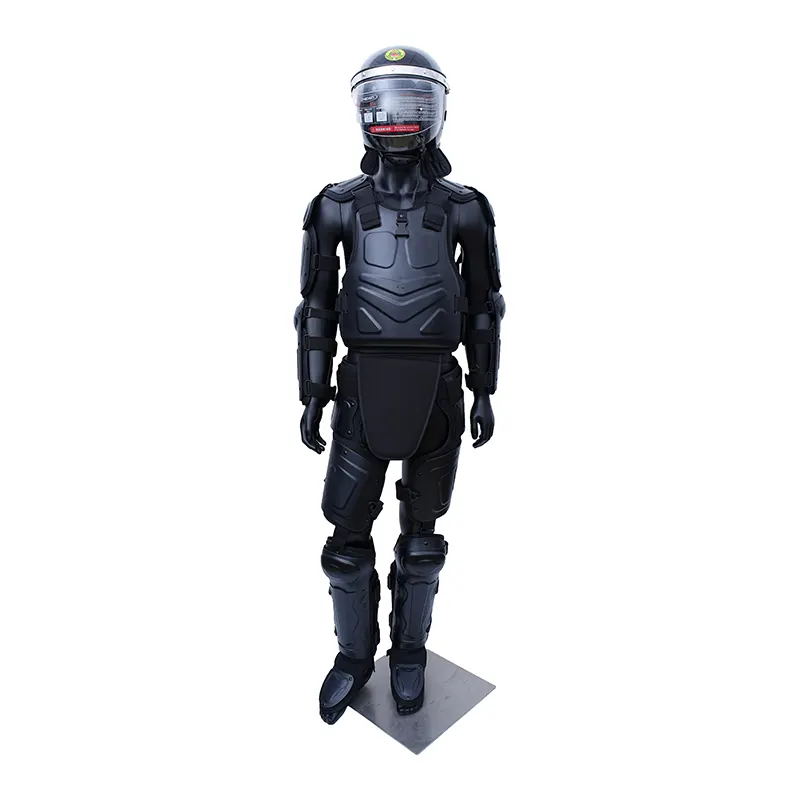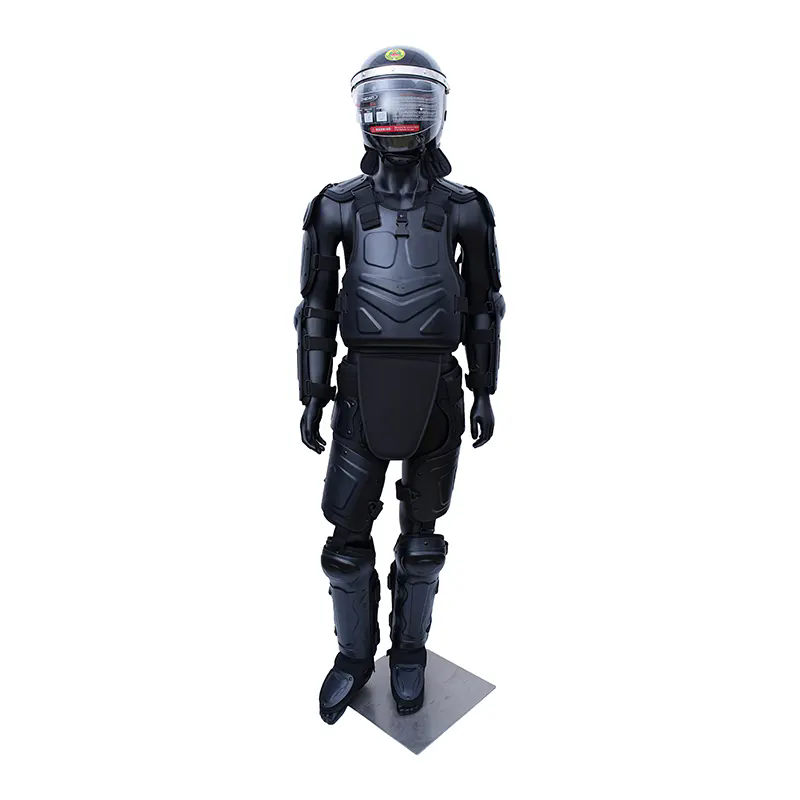



Galaxy’s PC ABS Anti Riot Helmet Injection Mould is developed for manufacturers seeking consistent helmet-shell production with PC and PC+ABS materials. With a single-cavity integrated concave insert, P20/718H pre-hardened steel, Ra 0.8 cavity polishing, and a theoretical service life of 300,000–500,000 shots, the mould is designed for stable and repeatable industrial production.
Producing anti-riot helmet shells requires more than simply shaping thermoplastic material. The injection mould must maintain dimensional consistency, control shell-wall uniformity, withstand repeated injection pressure, and support reliable demoulding over long production cycles. PC and PC+ABS are commonly selected for applications where impact performance and structural strength are important, making mould design a critical part of the manufacturing process.
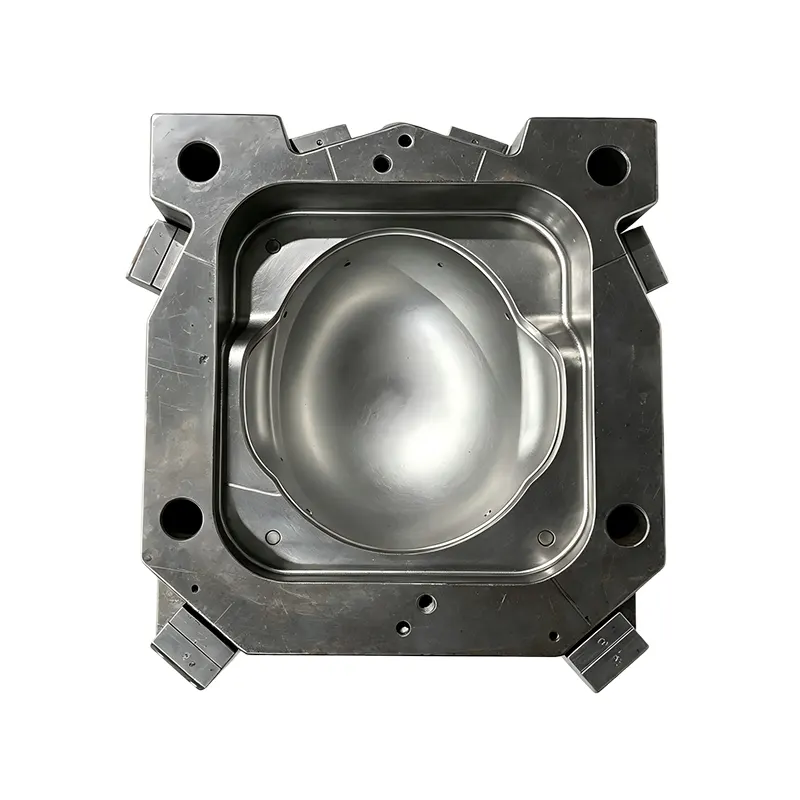
Table of Contents
- Why Does Helmet Mould Design Matter?
- What Is the Key Structure of a PC ABS Helmet Mould?
- PC ABS Anti Riot Helmet Injection Mould Specifications
- Why Are PC and PC+ABS Suitable for Helmet Shell Moulding?
- How Do Precision and Durability Affect Production?
- How Is the Mould Manufactured and Tested?
- What Should Buyers Check Before Ordering?
- Where Can the Mould Be Applied?
- Frequently Asked Questions
- Get a Customized Mould Solution
Why Does Helmet Mould Design Matter?
An injection mould directly determines how accurately a helmet shell is reproduced during each production cycle. For protective equipment, consistency is particularly important because variations in geometry, wall thickness, surface quality, or demoulding can affect downstream assembly and product inspection.
A well-engineered helmet mould should provide a stable cavity profile while managing injection pressure and cooling conditions. The objective is not simply to create the correct external shape, but to maintain repeatability throughout extended production.
- Dimensional consistency: Helps maintain the intended helmet-shell geometry.
- Uniform moulding: Supports consistent shell-wall formation.
- Wear resistance: Allows the tool to withstand repeated production cycles.
- Reliable demoulding: Reduces the possibility of damage or visible ejection marks.
- Surface quality: A polished cavity can help produce a clean and consistent shell appearance.
Research on injection-moulded helmet production has also identified shorter production cycles, stable product quality, and impact resistance as important advantages associated with injection moulding compared with more traditional forming approaches.
What Is the Key Structure of a PC ABS Helmet Mould?
Galaxy's mould uses a single-cavity integrated concave insert structure. This configuration is suitable for anti-riot helmet outer-shell production and provides a dedicated cavity geometry for reproducing the required shell profile.
The cavity uses P20 and 718H pre-hardened mould steel, while the mould base uses 45# carbon steel. The combination is intended to balance cavity wear resistance with overall mould-base rigidity during injection.
Single-Cavity Configuration
A single-cavity design allows engineering attention to remain focused on accurate reproduction of the helmet shell. It can also simplify mould balancing and production management when the product requires a relatively large projected moulding area.
Pre-Hardened Cavity Steel
P20 and 718H are established mould-steel options for industrial tooling. Their use in the cavity provides a practical foundation for repeated production, particularly when the mould is expected to operate for extended periods.
Fine Cavity Polishing
The cavity is processed through multi-stage polishing to achieve an Ra 0.8 surface finish. A controlled cavity finish helps reduce obvious machining marks on the moulded shell and supports a cleaner finished appearance.
PC ABS Anti Riot Helmet Injection Mould Specifications
The following parameters summarize the core configuration described for Galaxy's helmet-shell mould. Actual mould dimensions, runner design, cooling layout, and injection-machine requirements can be customized according to the customer's helmet CAD model and production requirements.
| Parameter | Specification | Production Benefit |
|---|---|---|
| Moulded Product | Anti-riot helmet outer shell | Designed for dedicated shell production |
| Material Compatibility | PC and PC+ABS | Supports common engineering thermoplastic options |
| Cavity Structure | Single-cavity integrated concave insert | Stable cavity geometry and controlled moulding |
| Cavity Steel | P20 / 718H pre-hardened steel | Good wear and deformation resistance |
| Mould Base | 45# carbon steel | Provides structural rigidity |
| Cavity Surface Finish | Ra 0.8 fine polishing | Supports smooth and clean shell surfaces |
| Theoretical Service Life | 300,000–500,000 shots | Supports long production cycles |
Why Are PC and PC+ABS Suitable for Helmet Shell Moulding?
Material selection influences mould design, processing conditions, cooling requirements, shrinkage behavior, and the performance characteristics of the finished shell. PC offers high impact resistance and heat resistance, while PC+ABS combines characteristics of polycarbonate with the processing and surface advantages associated with ABS.
For this reason, manufacturers should confirm the exact resin grade before the mould enters final engineering. Different grades may have different flow characteristics, shrinkage behavior, processing temperatures, and additives.
A suitable mould should therefore be designed around the customer's confirmed material rather than treating PC and PC+ABS as completely interchangeable materials. Material confirmation during the design stage can help reduce later modifications and improve production stability.
Material Selection Checklist
- Confirm the exact PC or PC+ABS resin grade.
- Review the manufacturer's recommended processing conditions.
- Consider expected shrinkage and dimensional requirements.
- Check the required surface appearance of the helmet shell.
- Match the material with the intended production volume and application.
How Do Precision and Durability Affect Production?
A helmet mould is repeatedly subjected to mechanical movement, injection pressure, thermal cycling, and ejection forces. Over time, inadequate material selection or insufficient machining precision can increase wear and dimensional deviation.
Galaxy addresses these requirements through precision CNC machining, multi-stage cavity polishing, trial injection, dimensional inspection, and demoulding tests. These steps create a quality-control loop between mould manufacture and production readiness.
The stated theoretical service life of 300,000–500,000 shots is particularly relevant for manufacturers planning sustained production. Actual mould life depends on factors such as material, processing conditions, maintenance, machine operation, and production environment, so service-life figures should be treated as engineering targets rather than a universal guarantee.
How Is the Mould Manufactured and Tested?
Precision tooling requires a controlled manufacturing process because small dimensional deviations in the cavity can be reproduced across every moulded part. A typical production workflow includes the following stages:
- Product and DFM review: The helmet CAD model and material requirements are evaluated before machining.
- Cavity engineering: The cavity structure and critical dimensions are established according to the approved design.
- CNC machining: High-precision machining creates the primary cavity and mould components.
- EDM and finishing: Complex or detailed areas can receive additional machining and finishing processes.
- Polishing: The cavity surface is refined to the required finish.
- Mould assembly: Cavity, mould base, ejection components, and other systems are assembled.
- Trial injection: The mould is tested with the intended production material.
- Inspection: Sample dimensions and demoulding performance are checked before delivery.
This approach is important for OEM buyers because the mould should arrive ready for integration into the intended production process rather than requiring extensive corrective work after installation.
What Should Buyers Check Before Ordering?
Selecting a helmet mould supplier involves more than comparing the initial tooling quotation. Procurement teams should evaluate the engineering specifications and quality-control process together.
| Buyer Checkpoint | Why It Matters |
|---|---|
| Material compatibility | Ensures the mould is designed around the intended resin |
| Cavity steel | Influences wear resistance and dimensional stability |
| Surface finish | Affects the appearance and processing quality of moulded shells |
| Service-life target | Helps estimate long-term tooling utilization |
| Trial moulding | Confirms practical production performance before shipment |
| Dimensional inspection | Verifies the finished mould against approved requirements |
| After-sales support | Helps manage maintenance and future tooling requirements |
Buyers can also review Galaxy's broader police equipment mould solutions when a project involves several protective-equipment components rather than a helmet shell alone.
Where Can the Mould Be Applied?
The mould is primarily intended for mass production of anti-riot helmet outer shells. It can be considered for manufacturers producing protective equipment for security and professional-use applications.
- Anti-riot helmet manufacturing
- Security equipment production
- Protective equipment OEM projects
- Custom helmet-shell development
- Batch injection production of PC or PC+ABS shells
For projects requiring additional protective-equipment tooling, manufacturers may also evaluate related solutions such as an anti-riot helmet mould or other dedicated police equipment mould configurations.
Frequently Asked Questions
What materials can this helmet injection mould process?
The mould is designed to be compatible with PC and PC+ABS raw materials. The final material grade should be confirmed during the engineering stage so that processing and moulding parameters can be matched appropriately.
What is the cavity structure?
The mould uses a single-cavity integrated concave insert structure designed specifically for anti-riot helmet outer-shell production.
What steel is used for the mould cavity?
The cavity uses P20 and 718H pre-hardened mould steel, while the mould base uses 45# carbon steel.
What surface finish does the cavity have?
The cavity undergoes multi-stage polishing to achieve an Ra 0.8 fine-polishing standard, supporting smooth and clean moulded shell surfaces.
How long can the mould be used?
The stated theoretical service life is approximately 300,000–500,000 shots. Actual service life depends on resin grade, processing conditions, maintenance, machine operation, and other production factors.
Is the mould tested before delivery?
Yes. Each mould undergoes trial injection, dimensional inspection, and demoulding smoothness testing before delivery to help verify production readiness.
Get a Customized Mould Solution
Choosing the right tooling configuration at the beginning of a helmet project can reduce production risks and provide a more stable path from CAD design to mass production. Galaxy combines precision mould machining, material compatibility, cavity finishing, trial injection, and inspection to support manufacturers developing PC and PC+ABS anti-riot helmet shells.
If you are planning a new helmet project, replacing an existing tool, or developing a customized shell, contact us with your CAD drawing, material specification, production volume, and machine information. Galaxy can review your requirements and provide a suitable mould configuration, engineering solution, and quotation for your project.