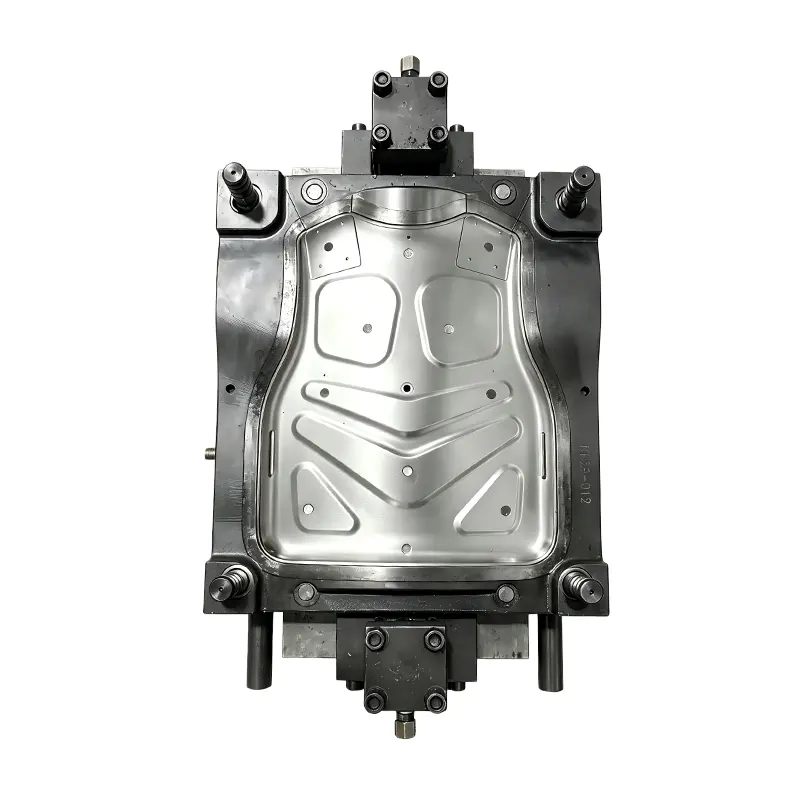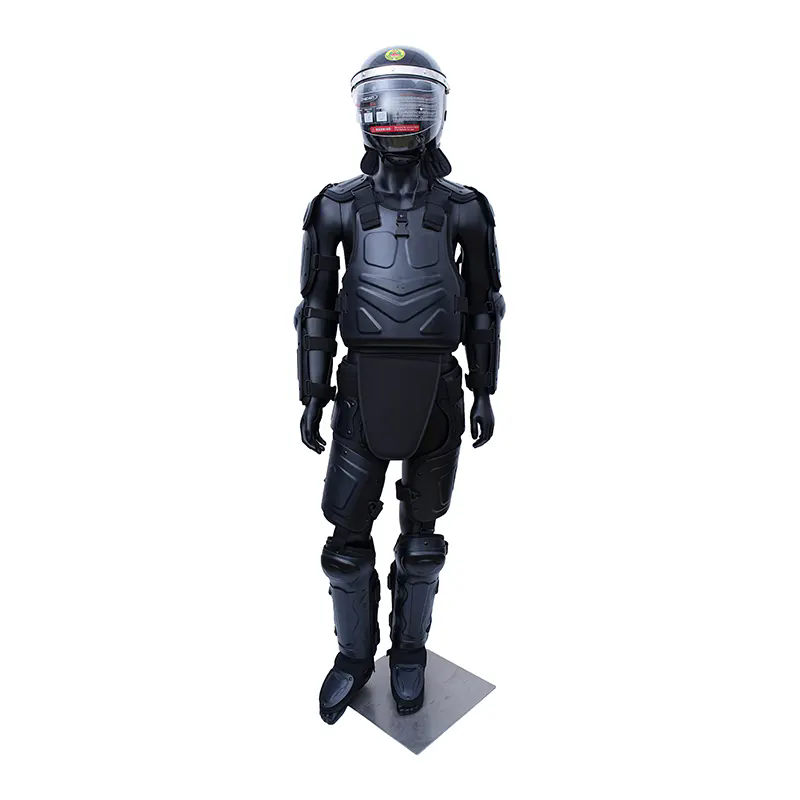



For manufacturers seeking reliable, repeatable production of protective equipment, the Anti Riot Suit Chest Protector Single Cavity Injection Mold from Galaxy provides a practical tooling solution for producing consistent chest protection plates. Its single-cavity integrated concave insert structure, pre-hardened cavity steel, and compatibility with PC, PC+ABS, and PA6 materials make it suitable for demanding mass-production applications.
An anti-riot chest protector is more than a shaped plastic component. Its dimensional consistency, surface quality, structural geometry, and production repeatability can all influence the performance and usability of the finished protective equipment. For this reason, mold design is an important part of the manufacturing process.
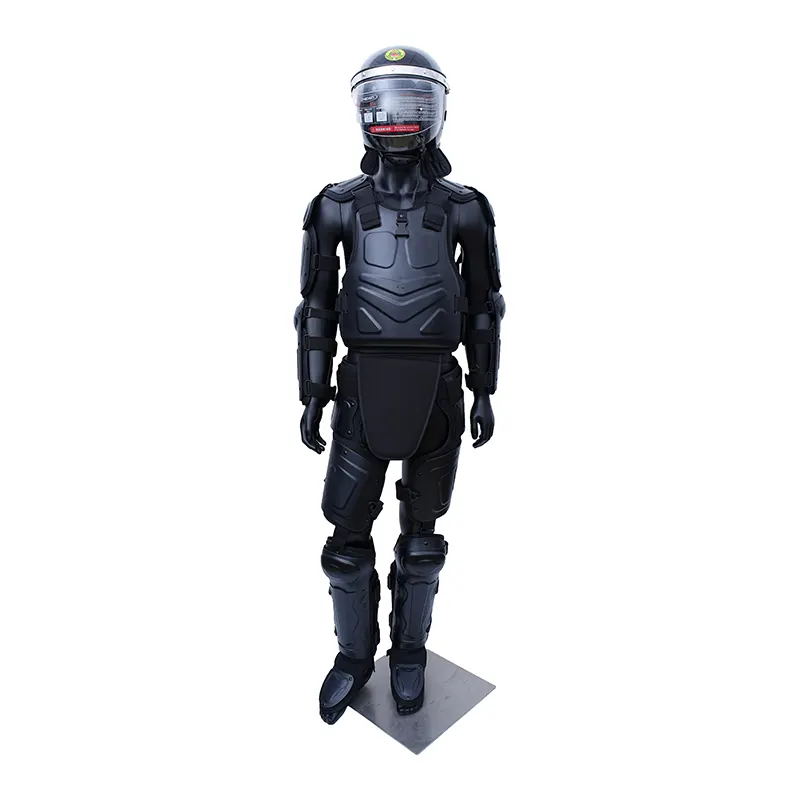
The Anti Riot Suit Chest Protector Single Cavity Injection Mold is designed around the production requirements of riot suit chest protection plates. Galaxy's solution uses a single-cavity integrated concave insert structure, P20 or 718H pre-hardened mold steel for the cavity, and 45# carbon steel for the mold base. The cavity can achieve an Ra 0.8 fine-polished surface, while the theoretical mold life is approximately 300,000–500,000 shots.
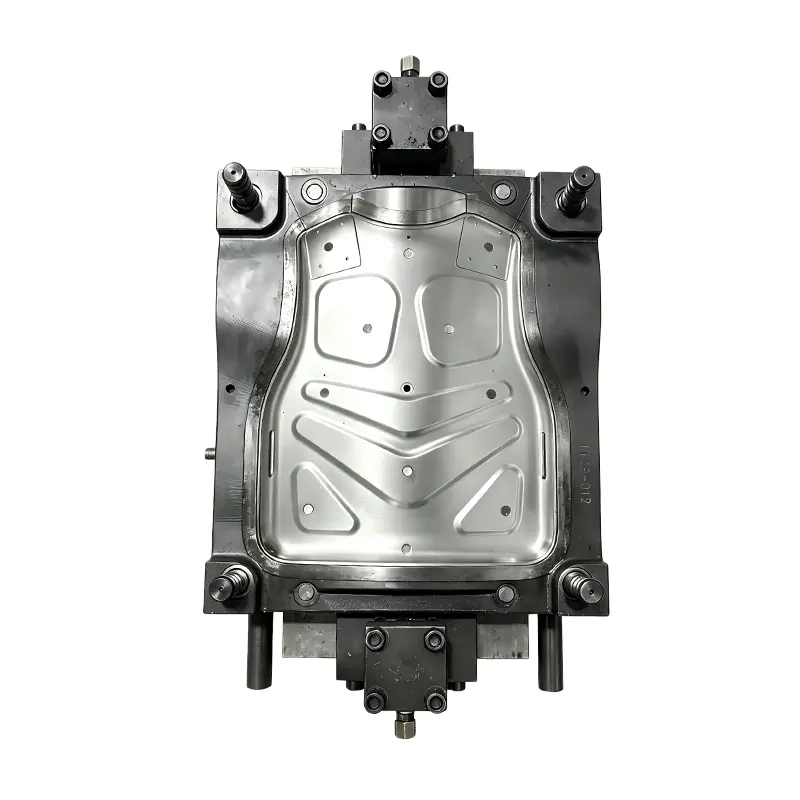
Table of Contents
- Why Is the Injection Mold Important for Riot Suit Chest Protectors?
- What Makes a Single-Cavity Mold Structure Effective?
- Which Materials Can the Mold Process?
- Key Specifications at a Glance
- What Are the Main Manufacturing Advantages?
- How Does Precision Manufacturing Affect Mold Performance?
- Where Can This Mold Be Used?
- How Should Manufacturers Select the Right Mold Supplier?
- Frequently Asked Questions
- Conclusion
Why Is the Injection Mold Important for Riot Suit Chest Protectors?
Injection molding provides an efficient way to manufacture polymer protective components in repeatable quantities. However, the quality of the finished chest protector depends heavily on the accuracy and stability of the mold.
A chest protector generally requires a defined curved profile, controlled wall thickness, smooth surfaces, and stable dimensions from one production cycle to another. If the mold cavity is poorly designed or manufactured, the resulting components may experience dimensional variation, visible processing marks, difficult demolding, or inconsistent fit during assembly.
A purpose-built mold therefore helps manufacturers establish a repeatable production process. Instead of treating the chest plate as a generic plastic part, the tooling is developed around its protective geometry and intended production environment.
- Consistent chest protector geometry
- Stable dimensional repeatability
- Controlled cavity surface quality
- Reliable demolding performance
- Compatibility with selected engineering plastics
- Long-term production capability
For companies producing security equipment in batches, these characteristics can help reduce production variation and improve manufacturing efficiency.
What Makes a Single-Cavity Mold Structure Effective?
The Anti Riot Suit Chest Protector Single Cavity Injection Mold uses a single-cavity integrated concave insert structure. This configuration is particularly useful when manufacturers prioritize stable dimensional control and consistent molding conditions for a relatively large protective component.
Because there is one molding cavity, the tooling focuses injection and cooling considerations on one finished part per cycle. This can simplify process optimization and make it easier for production engineers to monitor dimensional stability during trial molding and subsequent mass production.
The integrated concave insert also provides the forming surface required to create the characteristic curved chest protector profile. Accurate CNC machining and subsequent polishing are important because the cavity surface directly influences the appearance and dimensional quality of every molded component.
For manufacturers with specific chest protector designs, the cavity geometry can be developed from product drawings or 3D data. Proper draft, parting-line positioning, ejection, and material-flow considerations should be evaluated before the mold enters final machining.
Which Materials Can the Mold Process?
Material compatibility is another important consideration when purchasing protective equipment tooling. Different polymer formulations can have different flow, shrinkage, impact, temperature, and processing characteristics.
This mold is designed to support three mainstream material options: PC, PC+ABS, and PA6. Such flexibility can help manufacturers select a material according to their product design and production requirements.
- PC: Known for high impact resistance and useful optical and mechanical properties in many molded applications.
- PC+ABS: Combines characteristics of polycarbonate and ABS and is widely used where a balance of toughness, processing performance, and surface appearance is required.
- PA6: An engineering thermoplastic valued for mechanical strength and wear resistance in suitable applications.
Material selection should always be based on the finished product specification, molding-machine parameters, environmental conditions, and applicable safety or performance requirements. The mold itself should be engineered around the actual resin and processing conditions rather than assuming that every plastic behaves identically.
Key Specifications at a Glance
The following specifications summarize the core configuration of this chest protector injection mold:
| Parameter | Specification |
|---|---|
| Molded Product | Riot suit chest protection plate |
| Compatible Materials | PC, PC+ABS, PA6 |
| Cavity Structure | Single-cavity integrated concave insert |
| Cavity Steel | P20 / 718H pre-hardened mold steel |
| Mold Base | 45# carbon steel |
| Cavity Surface Finish | Ra 0.8 fine polishing |
| Theoretical Service Life | 300,000–500,000 shots |
| Primary Application | Mass production of riot suit chest protection plates |
These parameters give procurement teams a useful starting point when comparing tooling solutions. Actual mold configuration should be confirmed against the customer's product drawing, material, injection equipment, production volume, and required tolerances.
What Are the Main Manufacturing Advantages?
Choosing a specialized mold rather than adapting a general-purpose tool can provide several practical advantages for protective equipment manufacturers.
Consistent Molding Precision
The single-cavity integrated structure is designed to support stable forming conditions and consistent chest protector dimensions. This is particularly valuable when multiple batches must maintain the same product geometry.
Broad Material Adaptability
Compatibility with PC, PC+ABS, and PA6 gives manufacturers more flexibility when developing or producing different versions of protective equipment.
Wear-Resistant Cavity Construction
P20 and 718H pre-hardened mold steels provide a practical foundation for long-term production tooling. Their use can support resistance to wear and deformation when the mold is operated under appropriate processing conditions.
Stable Mold Base
A 45# carbon steel mold base provides structural support for the cavity and other mold components. Stable tooling construction is important because injection pressure places mechanical loads on the mold during each production cycle.
Fine Surface Finish
An Ra 0.8 cavity finish can contribute to a cleaner molded surface and reduce obvious machining marks on the finished chest protector. Surface quality is particularly relevant for visible protective equipment components.
Long Production Potential
With a theoretical service life of approximately 300,000–500,000 shots, the mold is intended for extended production cycles. Actual service life depends on resin selection, processing conditions, maintenance, operating practices, and production environment.
How Does Precision Manufacturing Affect Mold Performance?
Precision machining is central to injection mold performance. The cavity profile must accurately reproduce the intended chest protector geometry, while the mold's moving and stationary components must work together smoothly.
For this type of mold, CNC machining is used to establish the cavity profile and dimensional accuracy. Multi-stage polishing can then improve the cavity surface quality. Before delivery, trial injection, dimensional inspection, and demolding checks provide additional opportunities to identify potential production issues.
A practical quality-control process should consider:
- Verification of cavity dimensions against the approved product drawing.
- Inspection of cavity surface quality after machining and polishing.
- Confirmation of mold assembly and component alignment.
- Trial injection using the intended material and appropriate process parameters.
- Inspection of molded part dimensions and appearance.
- Verification of smooth and reliable demolding.
For international buyers, requesting mold inspection documentation and trial-shot information can also make supplier evaluation more transparent.
Where Can This Mold Be Used?
The primary purpose of this tooling is the mass production of chest protection plates for anti-riot suits. It can be considered by manufacturers and suppliers involved in security equipment production, protective gear manufacturing, and customized chest protector development.
Typical production scenarios include:
- Anti-riot suit chest plate production
- Security equipment manufacturing
- Protective equipment OEM projects
- Customized chest protector mold development
- Batch injection molding of protective polymer plates
- Replacement or new-tooling projects for existing production lines
Manufacturers should distinguish between the function of the mold and the performance of the final protective product. A high-quality injection mold can help produce consistent components, but the finished chest protector must still be designed, tested, and validated according to its intended application and applicable standards.
How Should Manufacturers Select the Right Mold Supplier?
When sourcing an injection mold from a China manufacturer, buyers should evaluate more than the quoted mold price. A reliable supplier should be able to explain the tooling structure, steel selection, material compatibility, trial process, expected service life, and after-sales support.
Before placing an order, procurement teams should consider the following checklist:
- Product data: Provide accurate 2D drawings, 3D models, or physical samples.
- Material: Confirm whether PC, PC+ABS, PA6, or another resin will be used.
- Production volume: Estimate annual or lifetime shot requirements.
- Steel: Confirm cavity and mold-base materials.
- Surface finish: Define the required cavity polishing level.
- Trial molding: Confirm whether trial injection and dimensional inspection are included.
- Maintenance: Ask about recommended cleaning, lubrication, inspection, and spare parts.
- Customization: Confirm whether cavity geometry can be adapted to the customer's chest protector design.
For buyers comparing suppliers, Galaxy's product information provides a clear starting specification: a single-cavity integrated concave insert, P20/718H pre-hardened cavity steel, 45# carbon steel mold base, Ra 0.8 surface finish, and a theoretical service life of 300,000–500,000 shots.
Frequently Asked Questions
What materials are compatible with the Anti Riot Suit Chest Protector Single Cavity Injection Mold?
The mold is designed to be compatible with PC, PC+ABS, and PA6 raw materials. Final processing parameters should be established according to the selected resin and injection molding machine.
Why use a single-cavity structure for a chest protector?
A single-cavity integrated structure allows the tooling to focus on stable forming of one chest protection plate per cycle. It can simplify mold-flow optimization and dimensional control for the intended component.
What steel is used for the mold cavity?
The cavity can use P20 or 718H pre-hardened mold steel. The mold base uses 45# carbon steel.
What is the expected service life of the mold?
The theoretical service life is approximately 300,000–500,000 shots. Actual service life varies according to resin characteristics, machine settings, production frequency, maintenance, and operating conditions.
Can the mold be customized for a different chest protector design?
Injection molds can generally be engineered around specific product geometry. Buyers should provide a 3D model, technical drawing, or representative sample so the supplier can evaluate cavity geometry, draft, parting, ejection, and other tooling requirements.
Is trial injection necessary before mass production?
Yes. Trial injection helps verify molding behavior, dimensions, surface quality, and demolding performance before the mold enters regular production. It is an important step for reducing potential production problems.
Conclusion
The Anti Riot Suit Chest Protector Single Cavity Injection Mold is an important tooling option for manufacturers that require repeatable production of polymer chest protection plates. Its single-cavity integrated concave insert structure, compatibility with PC, PC+ABS and PA6, pre-hardened cavity steel, fine-polished surface, and theoretical 300,000–500,000-shot service life make it suitable for long-term protective equipment manufacturing.
For companies looking for a China manufacturer or supplier capable of supporting OEM tooling and batch production, selecting a mold based on engineering quality, material compatibility, inspection procedures, service life, and after-sales support can provide a stronger foundation for reliable production. If you are developing a new anti-riot chest protector or planning a tooling replacement project, contact us to discuss your product drawings, material requirements, production volume, and customized mold solution with Galaxy.